YOU MAKE A MARK, SOMETHING UNEXPECTED HAPPENS, AND YOUR NEXT MOVE HAS TO BUILD FROM WHAT'S ON THE PAGE, NOT FROM WHAT YOU PLANNED.
Lead Anyway: A watercolor Workshop

The Leadership Presence Studio works with capable professionals feeling the strain of pressure, visibility, or self-doubt.
Lead Anyway is a watercolor workshop for teams who already work together. Five hours, up to 18 people, no artistic skill required. What your team gets is something a slide deck can't produce: watching themselves respond to pressure in real time, and deciding what to do about it.
Book an intro conversationThe premise:
Watercolor cannot be fully controlled.
That's not a metaphor. That's the actual condition of leadership right now. A watermark is woven into the fiber of the paper, invisible until the light hits it right, and then unmistakably there.
The Watermark Leadership™ framework is built on the same premise: the capacity to lead through uncertainty is already present in your people. This workshop creates the conditions for it to become visible.
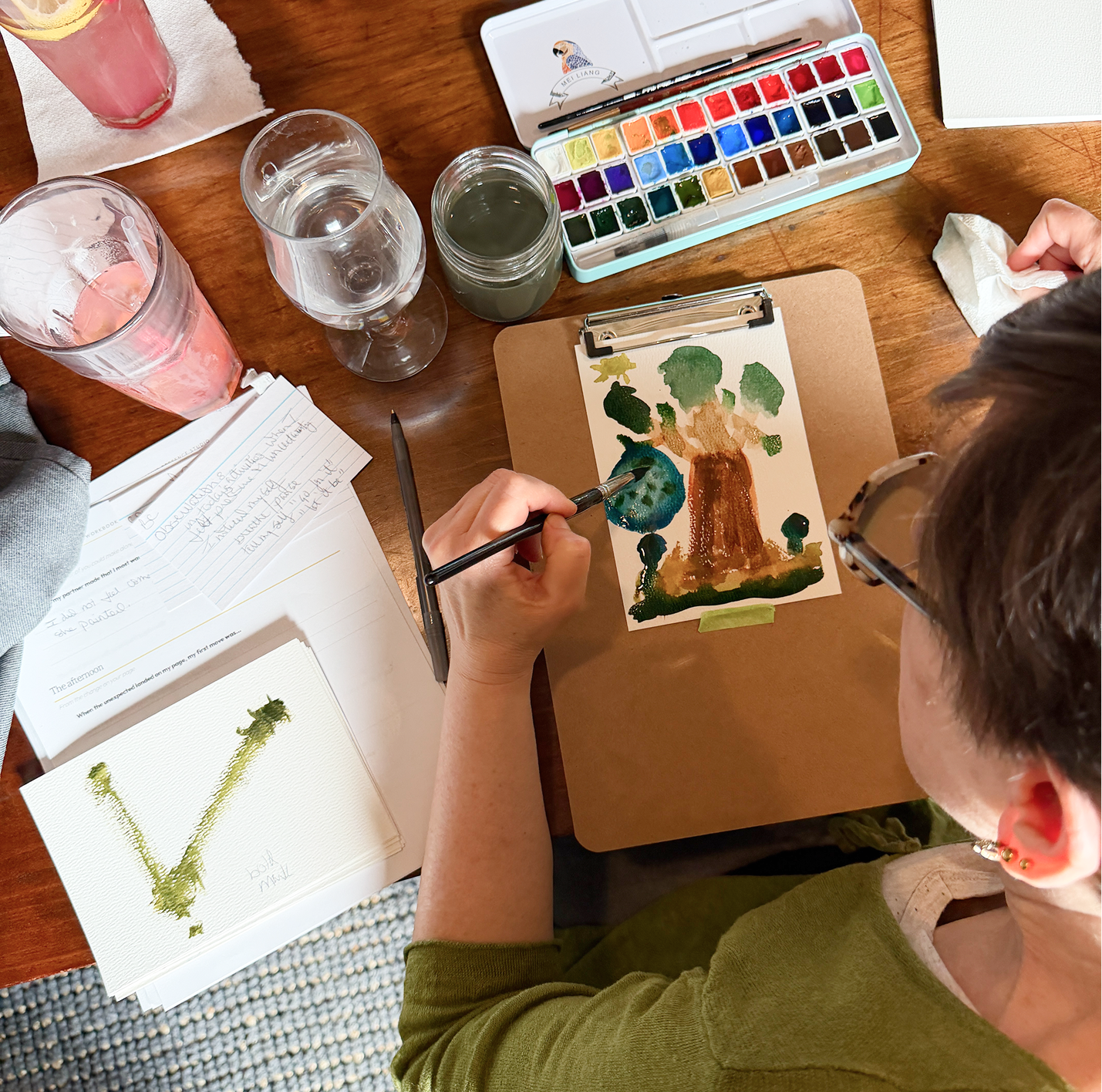
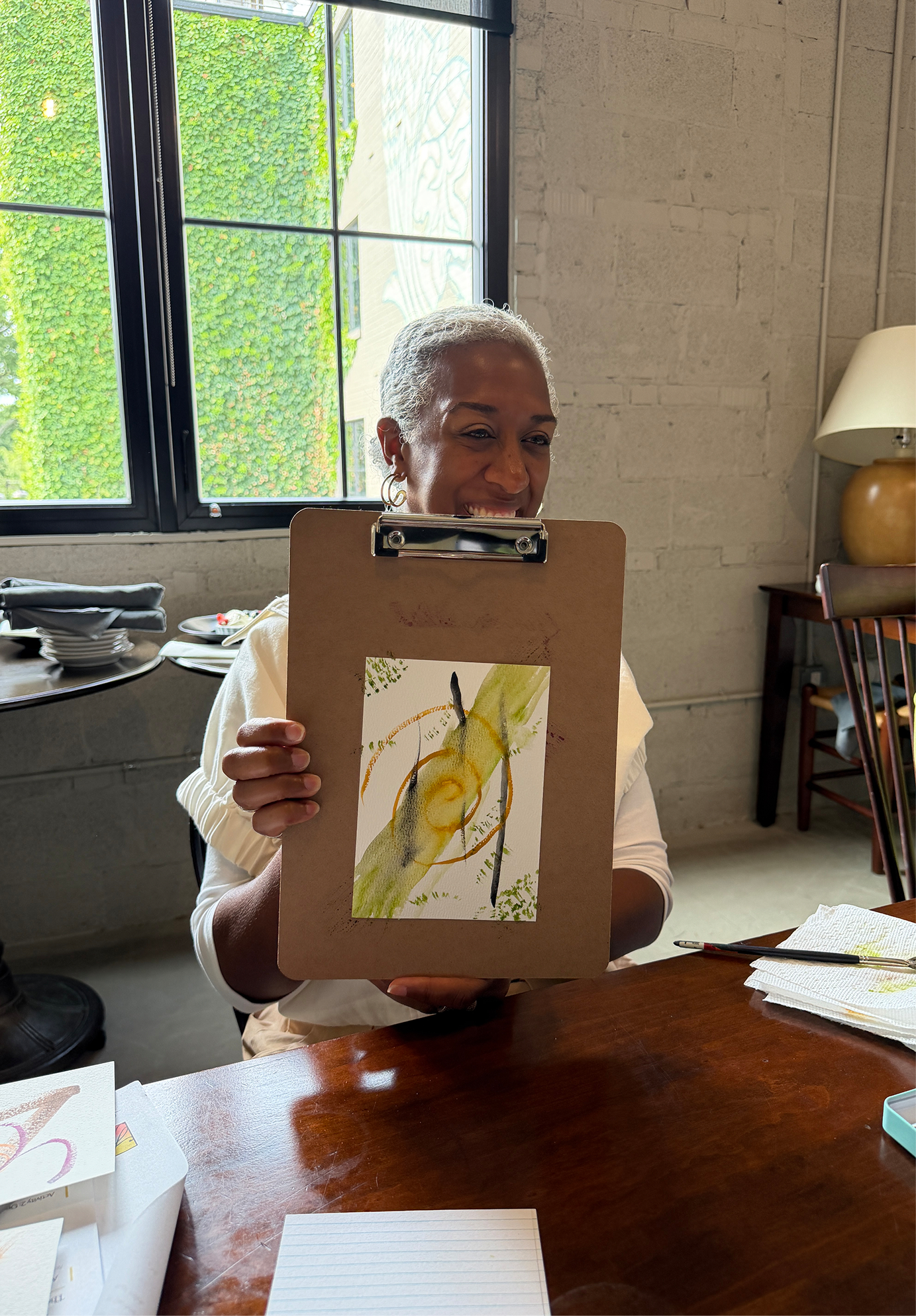
What a session looks like:
Six activities, sequenced from free exploration to increasing constraint to chosen vulnerability.
EACH ONE IS DESIGNED, NOT ASSEMBLED.
Each one is designed, not assembled.
The day opens with no prompt and no wrong moves, so the inner critic can stand down. Then the constraints arrive: painting without your reliable tools, building something you don't fully control with a partner, acting on instinct when there's no time to plan.
The middle of the day turns up the pressure in a way I won't spoil here. That's part of the design, and every sponsor knows exactly what's coming before we book.
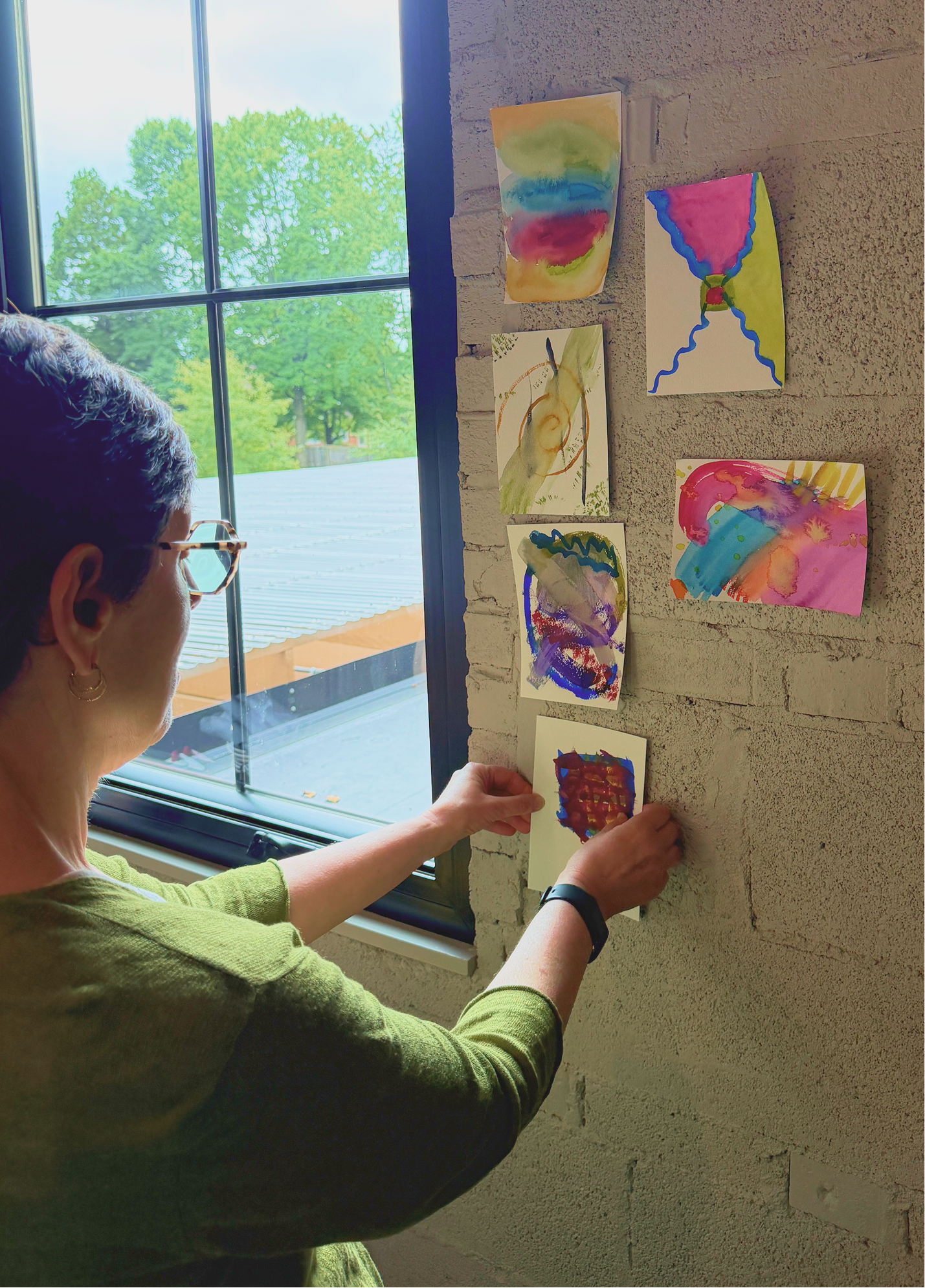
It ends with each person choosing one piece they made, naming what it showed them about how they respond under pressure, and writing a 30-day commitment a peer will hold them to.
It is also, reliably, one of the most fun days a team will have together all year.
What your team leaves with:
A named pressure reflex: the pattern that quietly runs each of them when the plan breaks (Control, Speed, or Recovery)
Evidence, not just insight: they watched themselves respond in real time, in their body
A specific 30-day behavior commitment, with a peer accountability partner
A shared language the team keeps using long after the paint dries
+ Everything they painted!
Why it works:
People reach insight by making something with their hands.
It’s harder to reach by just talking about it. That's constructionist learning, a well-established approach in leadership development and the same foundation under LEGO Serious Play. Lead Anyway rests on it too. The difference is the medium. Watercolor adds a variable that blocks and bricks don't, because it won't do what you tell it. So what surfaces is how your team responds when the plan stops cooperating.
Almost all leadership development is verbal, a format that quietly advantages some cognitive styles over others. As many as 1 in 5 adults are neurodivergent (Deloitte, 2023). Lead Anyway adds another access point to insight: making, movement, and visual thinking. It doesn't replace conversation. It widens who gets to the insight, and how.
And the capability it trains is one leaders say matters more than ever: Harvard Business Publishing's 2025 Global Leadership Development Study found that 71% of leaders now rate the ability to function long-term in constant change, uncertainty, and stress as extremely or very important, up from 58% the year before. You can't train that with a case study. You can train it with a medium that resists following your plan.
Is this right for my team?
Good fit!
- Teams navigating complexity, ambiguity, or organizational change.
- Strong individual performers learning to lead adaptively together.
- Leaders who are done with frameworks-on-slides
Not right now
- Teams in active crisis
- Teams with a known unresolved rupture, or sessions where a stakeholder plans to attend to evaluate rather than participate.
- That conversation happens before anything is booked.
FAQ:
Q: My team will say they can't paint.
A: Perfect. No artistic skill is required, and it helps not to have any. Skill gives you the illusion of control, and the workshop works because the water takes that illusion away from everyone equally.
Q: How is this different from a team-building activity?
A: Team building optimizes for a good time. This is a developmental experience that happens to be a good time. Every activity is built to surface a specific behavioral pattern, and everyone leaves with a named reflex, a 30-day commitment, and a peer holding them to it. A fun paint-and-sip evening won't get your team any of that.
Q: Is this art therapy?
A: No. It's leadership development that uses an unpredictable medium to make behavior visible.
Q: What if someone doesn't want to participate?
A: Everything in the room is an invitation, not a requirement. Anyone can step back from any activity, no explanation needed. That choice is built into the design, and I go over it with your sponsor before we book.
Q: What are the logistics?
A: Up to 18 participants. Five hours total, run as a single day or as two 2.5-hour sessions. I bring all the materials. You bring a room with tables and your team.
Q: What does it cost?
A: Workshops are booked as a flat session rate, scoped in a short conversation about your team and format.
Making the case internally?
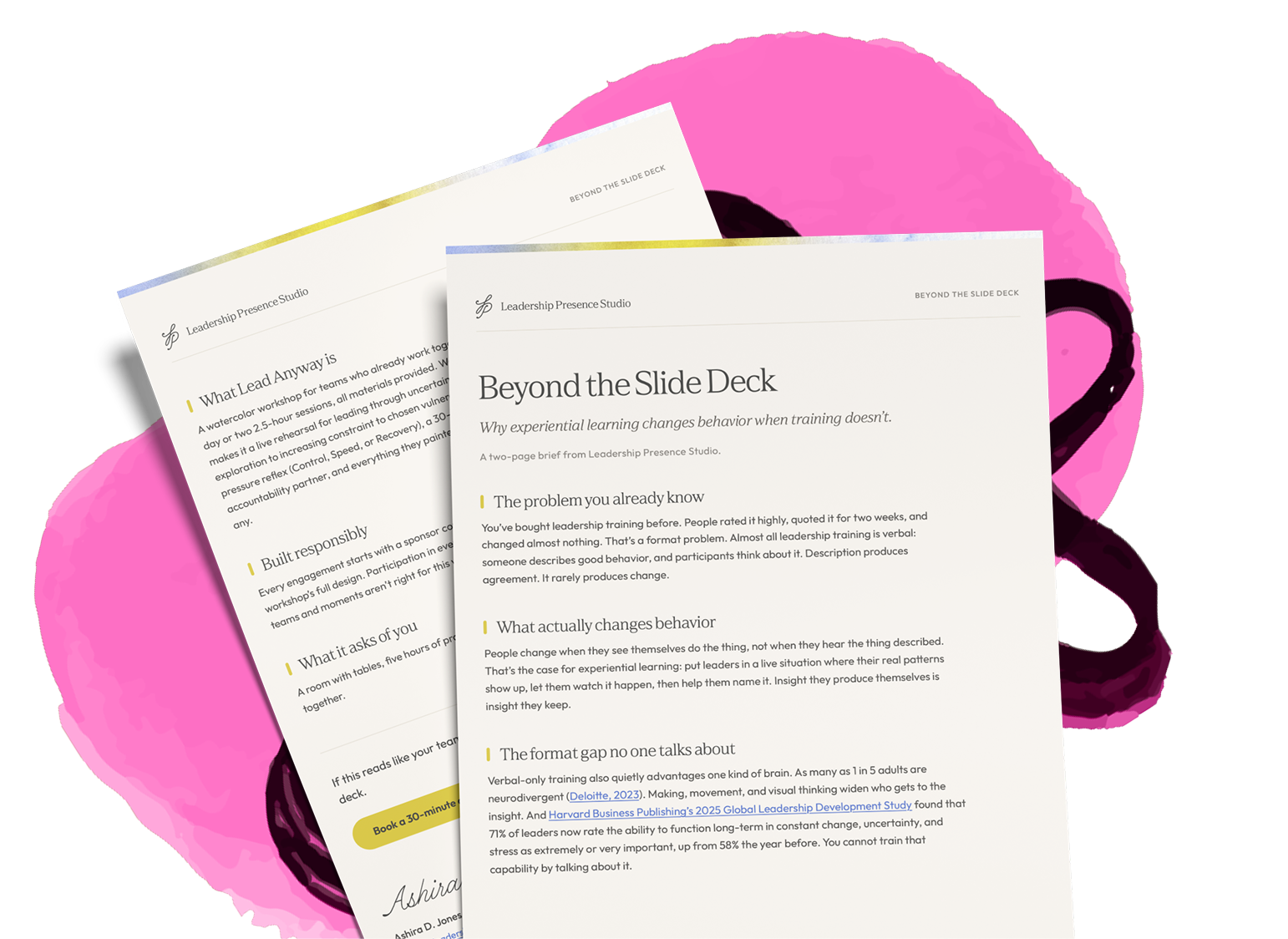
Download the two-page brief: Why experiential learning changes behavior when training doesn't. Written to be forwarded to the person who signs off.
Let's find out if this fits your team. A 30-minute conversation, no pitch deck.
We'll talk about what your team is carrying and whether this is the right room for it.

Notes from the studio
A newsletter about leading when you can't control the outcome. No chatter, just real connection.